Table Of Content
- What You Must Know About Optical Fiber Cable: Types and Installation Tips
- What are Cat7 Cables?
- Fibre Deployment: Key to the Success of 5G in India
- Why are data centers important to business?
- The Security and Reliability of Fiber Optic Networks for Critical Infrastructure
- Colocation data centers
- Networking Academy is a great start for students

The physical architecture and design of a data center is crucial for ensuring optimal performance, security, and reliability. Previously, a cabinet drawing anything more than 5 KW was considered a high-density rack, which has risen to somewhere around 7-10 KW, with high-performance ones featuring densities as high as KW. As processing large amounts of data has become widespread, high-density capacity has become an indispensable "must-have" feature in all data center facilities. Power density is a valuable metric for calculating a data center's actual computing efficiency.
What You Must Know About Optical Fiber Cable: Types and Installation Tips
To effectively determine a data center’s power needs, designers must assess both facility and IT infrastructure requirements. Facility power needs include HVAC systems and lighting, while IT infrastructure demands vary based on server workloads and specific hardware configurations, such as CPUs or GPUs. Heat waste generated through equipment could be used for appropriate applications, providing a cleaner alternative to conventional methods, such as space heating or water heating. Using a heat recovery system, data centers can collide a thermal energy, which would otherwise be wasted in the atmosphere, and subsequently minimize their environmental impact. Moreover, residual heat can be used to support the needs of district heating networks and other industrial processes, leading to other sustainability initiatives. With environmental sustainability and the augmenting of energy costs, several data centers have started pioneering energy efficiency.
What are Cat7 Cables?
It also provides fault tolerance through high interconnectivity, eliminates network loop concerns, and simplifies data center network management. Therefore, leading data center designs standards must provide optimum security against physical data breaches. This includes multiple layers of protection that incorporate both physical and logistical measures. Data centers are hubs of technological innovation, housing big data and cutting-edge equipment. The facilities that house these are designed for maximum connectivity, efficiency, and performance. Our purpose-built data centre campus in the heart of London leverages the very latest in data centre architecture with high density power, 5 layers of security, and connected communities of interest for digital growth in London.
Fibre Deployment: Key to the Success of 5G in India
These calculations and schematics are then used to fine-tune the overall system design and help in the selection of appropriate equipment. Based on initial targeted data sampling to date, the company has found files containing protected health information (PHI) or personally identifiable information (PII), which could cover a substantial proportion of people in America. To date, the company has not seen evidence of exfiltration of materials such as doctors’ charts or full medical histories among the data. Whether you’ve been tasked with implementing AppDynamics software or are responsible for setting up a monitoring dashboard, you’re sure to find certifications that align with your role. Become a technical leader by validating your end-to-end lifecycle skills in complex collaboration solutions.
Why are data centers important to business?
He then transitioned to discussing mechanical challenges in data centers, mentioning ongoing R&D efforts to develop cooling solutions for increasing heat rejection needs, "even before problems fully manifest." Learn about the IBM Cloud data centers located around the world to help you meet geography-specific requirements quickly. Like NAS, a SAN enables shared storage, but a SAN uses a separate network for the data and consists of a more complex mix of multiple storage servers, application servers, and storage management software.
The Security and Reliability of Fiber Optic Networks for Critical Infrastructure
Server architecture in data centers refers to the design and organization of servers and related components to efficiently process, store, and manage data. Researchers expect the growth of the power demands to hold steady, at least through 2021. Well-designed facilities are better capable of power distribution, ensuring they do not let electricity go to waste. They implement sophisticated automated systems that manage power-intensive processes much more efficiently to keep energy use in check even as the facilities expand and become more powerful.
What Is a Data Center? What Goes on Inside One? - Built In
What Is a Data Center? What Goes on Inside One?.
Posted: Wed, 06 Mar 2024 08:00:00 GMT [source]
Their role is to ensure that the systems align with the project requirements set by the data center owner. Separately, a commissioning agent, serving as an independent overseer, manages the entire commissioning process to guarantee that all systems and components fulfill the defined objectives. Alternative network topologies like ring or mesh can also be utilized to meet specific data center design requirements or to add redundancy. Redundant cabling provides alternative routes for data, thereby increasing network reliability.
Networking Academy is a great start for students
Search for power pushes emerging data center markets into the spotlight - JLL
Search for power pushes emerging data center markets into the spotlight.
Posted: Wed, 28 Feb 2024 08:00:00 GMT [source]
It will be a massive force in making data centers more efficient and more reliable than they are today. It is necessary to strictly control access to the data center using biometric access controls, and surveillance cameras should offer full coverage of all activities. Such measures help deter unauthorized access and provide a record of who has come and gone. A more recent approach is to use actual power measurements per server, taken with IT power-handling devices, such as intelligent power distribution units, located within each rack. Actual measurements can yield the most accurate estimates and give data center operators a better sense of how power demands and costs can fluctuate with workload demands. The data center design team drafts the initial blueprint and specifications for the facility.
However, an alternative topology, the spine-leaf architecture, has emerged and gained prominence in modern data center environments. This architecture is especially prevalent in high-performance computing (HPC) settings and has become the predominant choice among cloud service providers (CSPs). Data center network architecture refers to the design and layout of the interconnected nodes and pathways that facilitate communication and data exchange within a data center. It includes the physical and logical layout of network equipment, such as switches, routers, and cabling, to enable efficient data transmission between servers, storage systems, firewalls, and load balancers. Over the years I’ve worked with a number of different types of data center architectures.
The architect integrates state-of-the-art technologies such as scalable computing resources, energy-efficient power and cooling solutions, and high-level security devices, guaranteeing that operational transitions are seamless and perfect. In other words, the provided data center architecture suits all current technological requirements and future advancements, so the business remains nimble in an ever-changing digital landscape. Data is essential to businesses in the digital age and is at the heart of critical processes from internal operations to customer services. These vast amounts of data need to be stored somewhere that align to both technology and business requirements, classically an on-premise IT hub, with servers and equipment onsite. Today, modern data centres are the home of data, essential to keep our society running at speed and scale. These data centres are designed and built with huge amounts of planning and resources to ensure that the facilities within can support companies for decades to come.
Some of the most progressive "cloud-first" businesses in operation today might opt to forego a dedicated data center in favor of designing and deploying all workloads to a public cloud. Today's concerns about the environmental impact of carbon dioxide emissions from power generation have prompted many organizations to place new emphasis on the efficiency and sustainability of the data center. Designing a data center depends more specifically on whether you are building a new data center or upgrading and maximizing an existing data center. First determine whether you are planning to upgrade your existing data center or organize a new data center build out. Then, follow the pointers below to help you get the most out of your organization's data and network infrastructures.
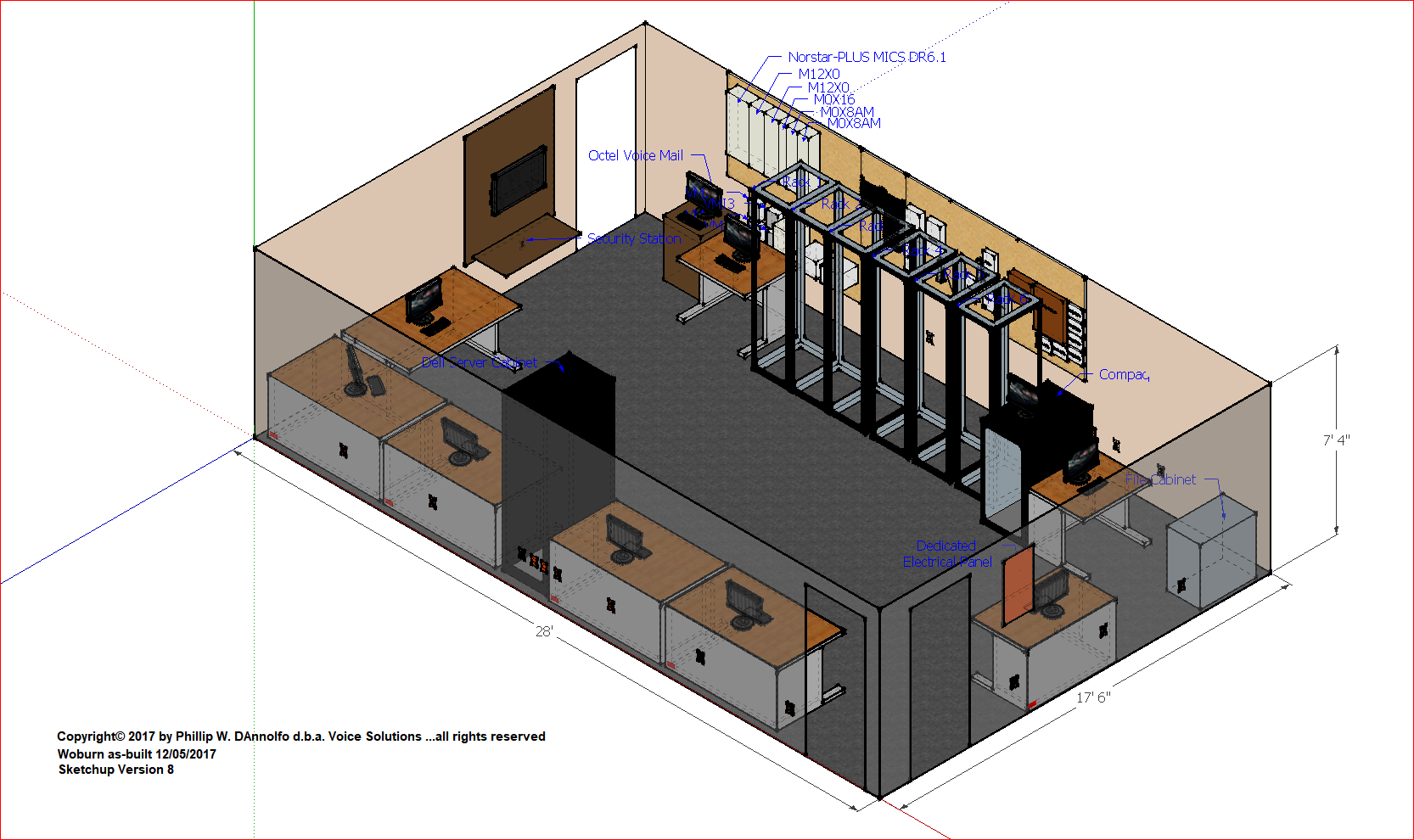
In recent years, the design paradigm has shifted, and overhead cabling is utilized, which often helps to reduce energy costs and reduce cooling needs. With the massive growth of data and a complex infrastructure with cables running throughout and a dizzying array of ports and plugs to manage, data center infrastructure can be a confusing topic. Moreover, it is a hassle for those who are not accustomed to the complex processes and equipment involved in managing and designing a data center facility. Data center cooling systems are core features of any data center, as heat can easily shorten the lifespan of equipment and even destroy expensive equipment. With AI and automation playing critical roles in future data centers,, what the future certainly holds is ours.. Using AI as a tool will help achieve such things as predictive maintenance and real-time power and cooling optimization.
Purpose built data centres often utilise the physical space as efficiently as possible, leaving room for growth in years to come. Racks and servers need careful planning with modular designs that allow for airflow and expansion. These sources collectively offer a well-rounded view of modern data center design, from foundational best practices to the latest technological innovations. Each provides unique insights, making them invaluable resources for anyone interested in data center design and management.
With most of the limelight into the connectivity & networking process and how the companies are using them, it overshadows the importance of physical infrastructure that makes any data center networking architecture possible. Often referred to as the future of cooling, this technique replaces water, a known enemy of electricity, with dielectric liquid coolant (chemically and electrically inert). This fluid allows components to be immersed in the liquid, negating the need for pumps and coils. Liquid immersion cooling solves potential problems with water around electric equipment and overcomes issues with spotty airflow allowing for denser, higher performance data centres of the future. Now 55% of staff no longer has a fixed office, which will increase to 75% within the next ten years.1 It is no longer possible or desirable to store all data on a single computer.


No comments:
Post a Comment